Whatsapp
While traditional sensors are confined to the small space of rigid carriers, flexible pressure sensors, with their "bendable and foldable, seamless fit" characteristics, break down the barriers between electronic devices and real-world scenarios. This innovative product, based on flexible materials and capable of accurately capturing pressure changes and converting them into electrical signals, is moving from the laboratory to the forefront of industrialization, sparking a "tactile revolution" in fields such as automotive, medical, and consumer electronics, giving technology a truly lifelike warmth and resilience.
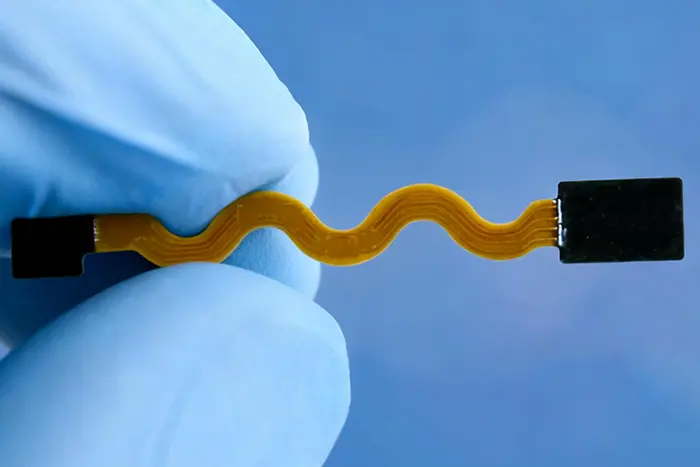
The core competitiveness of flexible pressure sensors stems from their disruptive breakthrough in traditional sensing technology—breaking free from the constraints of rigid structures and achieving seamless adaptation to complex curved surfaces and dynamic scenarios. Unlike traditional pressure sensors that rely on rigid substrates, flexible products often use flexible materials such as fabrics and polymers as carriers, combining mainstream technologies such as piezoresistive and triboelectric sensing to construct a sensing system that combines sensitivity and adaptability. Among them, piezoresistive flexible fabric sensors, with their stable anti-interference capabilities and accurate pressure capture performance, have become the mainstay of current commercial applications. Triboelectric sensors, on the other hand, stand out due to their self-powered nature, converting mechanical energy into electrical signals without an external power source, providing long-term solutions for wearable devices, remote monitoring, and other scenarios.
Technological upgrades have continuously expanded the performance boundaries of flexible pressure sensors. Today, mainstream products can achieve an ultra-thin design of 0.1mm, operate stably in extreme temperature ranges from -40℃ to 90℃ and in environments with 95% high humidity, and maintain stable performance after more than 100,000 rolling cycles and thousands of bending tests. Some fabric-based products can even withstand more than 100 washes, completely solving the pain points of traditional sensors such as "susceptibility to bending, easy damage, and foreign object sensation." In terms of accuracy, high-end products can capture minute pressure changes at the millipascal level. Combined with high-density sensor matrices and intelligent algorithms, they can generate real-time pressure cloud maps, transforming abstract pressure signals into visualized data, providing accurate decision-making basis for downstream applications.
In the field of intelligent vehicles, flexible pressure sensors are becoming a core component for improving driving experience and safety. By embedding sensing units within the seat, the system can accurately identify the height, weight, and posture characteristics of the driver and passengers, and even monitor breathing rate and fatigue levels in real time. This, combined with a pneumatic adjustment system, enables adaptive seat firmness, personalized massage, and posture correction reminders, transforming the seat from a simple support component into a "smart comfort manager." Simultaneously, ultra-thin, translucent touch-sensitive fabric sensors can be embedded in the center console, armrests, and other areas to achieve pressure-level touch control, gesture recognition, and tactile feedback. This simplifies operation and injects a sense of technology and design into the automotive interior, meeting the intelligent interaction needs of high-end models.
The healthcare field presents a significant application scenario for flexible pressure sensors. Their soft, breathable, and seamless fit perfectly meets the refined needs of medical monitoring. In ICU beds and home care beds, smart mattresses integrating sensors can monitor the patient's body pressure distribution in real time. Algorithms control the inflation and deflation of air bags to achieve automatic turning, effectively reducing the risk of pressure sores in long-term bedridden patients. Simultaneously, exportable pressure data reports provide quantitative support for optimizing care plans. In rehabilitation medicine, flexible foot pressure pads and smart insoles can accurately capture gait data, providing a scientific basis for diabetic foot screening and foot disease correction. Meanwhile, the sensing modules in wheelchair cushions can assess pressure risks in real time, providing personalized protection for people with mobility impairments.
Demand from the consumer electronics and sports sectors has further driven the application of flexible pressure sensors in various scenarios. Smart yoga mats, with their embedded sensing units, can capture pressure changes in different parts of the body in real time, generating movement correction suggestions and exercise data reports via an app, providing professional guidance for home fitness. Smart sports insoles can analyze foot pressure distribution and gait characteristics, helping athletes optimize their force application posture and reduce the risk of sports injuries. Furthermore, flexible sensors are rapidly penetrating cutting-edge fields such as electronic skin and VR/AR haptic feedback, giving robots precise tactile perception capabilities, enabling virtual interactions to have realistic pressure feedback, and building more immersive human-computer interaction scenarios.
Despite the broad market prospects, the industrialization of flexible pressure sensors still faces challenges such as a lack of standardization and cost control. Currently, product performance indicators and testing methods are not standardized across different companies, and the high R&D costs of some high-end materials and core algorithms have hindered large-scale adoption to some extent. However, with the vertical integration of the industry chain and technological iteration, domestic companies have gradually broken through core technology barriers, achieving full-process control from material preparation to sensor manufacturing through independent R&D. This has not only improved product stability but also effectively reduced costs, driving product penetration into the mid-range market.
Looking to the future, with the deep integration of IoT and AI technologies, flexible pressure sensors will develop towards multi-functional integration and intelligent upgrades. The application of self-healing materials will further enhance product durability, multi-physics sensing technology will enable the coordinated detection of signals such as pressure, temperature, and humidity, and the optimization of machine learning algorithms will give sensors stronger data analysis and decision-making capabilities. From intelligent interaction in car cabins to precise empowerment in medical monitoring, from personalized guidance in sports and fitness to bionic tactile sensing in robots, flexible pressure sensors are reconstructing the intelligent ecosystem with "soft power," making every contact a gentle resonance between technology and life, and ushering in a new era of intelligence that is more resilient and humane.